
Introduction
In the Associate of Arts Degree in Interior Design, students will learn how to tackle AutoCAD. Most students come to the class with no AutoCAD experience. This can be exciting, scary, and fun all at the same time.
First Steps
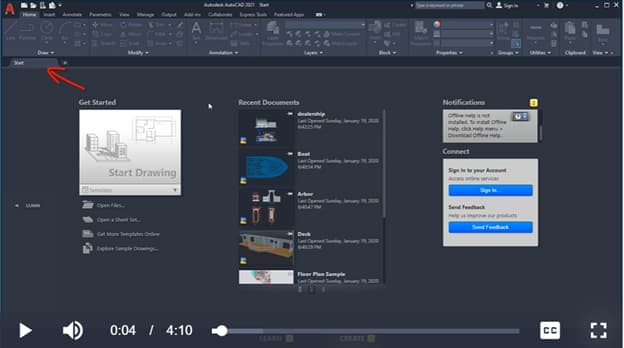
Students begin by examining the interface and working with basic commands. After the first few classes students know how to draw walls and make openings for windows and doors.
Documentation Process
Throughout the class students will create a notebook covering all the topics discussed in class. Each step that they learn is documented so that they can utilize their notebook in future classes and effectively produce drawings.
Annotation and Drawing Sets
Students continue on to learn how to annotate their drawings. They prepare their first full size drawing with a title block, legend, and notes.
Schedules and Field Experience
Another important part of a drawing set are the schedules. In class the students develop a door and hardware schedule, in addition to other schedules. Campus field trips are taken to explore the pieces and parts that make up a building. It is one thing to have walked through buildings with storefront systems all their lives. Now the students are able to understand how to draw and specify the parts so that a contractor could build from the students' drawing set.
Reflected Ceiling Plans
Reflected ceiling plans are another type of drawing that the students learn to develop. Ceilings are not only functional, they can also add a layer to a building that adds character to the space.
Capstone Application
By the time students complete their CAD 1 class they are ready to create a drawing set for their next class. Students are encouraged to work with the CAD program during the semester breaks so that they have an opportunity to apply what they have learned to real world situations.
Tags